September 2019 SME Life Magazine
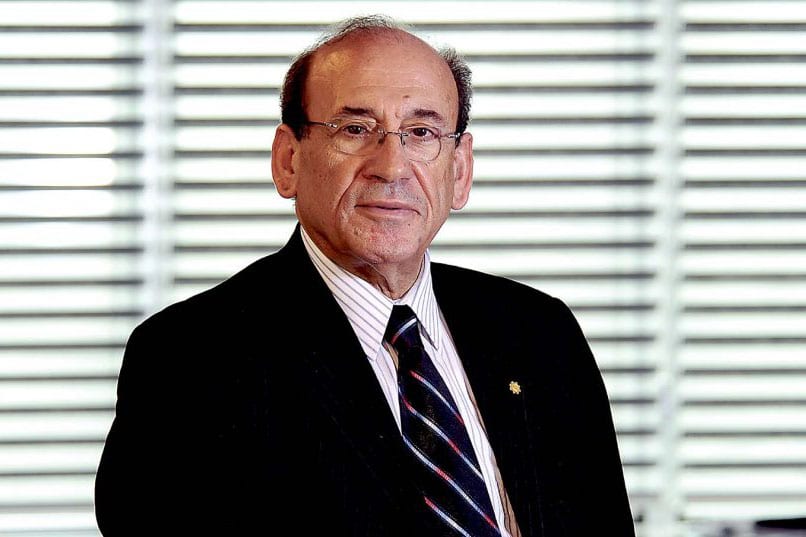
Noting that we have not been successful in exporting high value-added products, TURKTRADE Chairman of the Board Hayrettin Çaycı holds the view that, “In a near future where recession is being discussed around the world, certain conditions need to change in order to achieve export growth targets.”
According to data from the Turkish Exporters Assembly (TİM), in 2018 Turkey’s top 1000 exporters recorded 102,8 billion dollars in foreign sales. The 24,2 billion dollar portion of this, corresponding to 23,5 percent, was realized by members of the Turkish Foreign Trade Association (TURKTRADE). Ford Otomotiv, at the top of the list, together with 7 of the companies in the top 10, are members of this association.
As much as TİM’s “top 1000 exporters” announcement, the Fortune 500 Turkey ranking was also eagerly awaited by economic circles. Some of the details in the Fortune 500 were quite striking. For example, while total revenues rose by 31,84 percent compared to the previous year, profitability fell by 16,63 percent. Moreover, when the 2018 PPI is taken into account, real sales were seen to have declined by 1,35 percent.
TURKTRADE Chairman of the Board Hayrettin Çaycı states that Turkey’s export and import policies should be guided by “sustainable, value-adding strategies,” and he underlines that the association has taken on a “think tank role” in reaching this goal. We spoke with Çaycı about the fundamental parameters of the Turkish economy and the structural state of our exports.
THE EXCHANGE RATE INCREASE AFFECTED BOTH REVENUE AND COST-How do you interpret the general picture reflected in the Fortune 500 Turkey list? In your view, what are the main reasons for the loss of revenue in real terms and the decline in profitability?
The exchange rate increase in the 3rd quarter of 2018 boosted revenues. As you know, the greater part of the inputs in industrial production is imported. Therefore, while 2018 revenues rose due to the exchange rate effect, at the same time the share of imported raw materials and supplies within the product price also increased. In other words, as revenue rose, the share of value added fell. Consequently, profitability could not increase at the same rate as the revenue growth.
-What does it mean that 119 of the companies named on the Fortune list reported losses?
Of course, I did not have the opportunity to examine the companies one by one. However, I think it would not be wrong to say that most of them incurred losses because of the high exchange rate difference expenses they took on in the 3rd and 4th quarters of 2018. In most of these companies, while inputs are in foreign currency or indexed to foreign currency, sales prices are set in TL. That is, since their expenses are indexed to foreign currency while their revenues are in TL, they recorded high losses because of the exchange rate increases in 2018.“PRODUCTION SHOULD BE PLANNED ACCORDING TO NEEDS”-The sectoral breakdown of the companies on Fortune 500 Turkey’s 12th list is as follows: 271 in manufacturing, 118 in trade, 85 in services and 26 in construction. Do you find the distribution balanced?
Frankly, it is not, and should not be, up to us to say whether the distribution is balanced. There is a need for our country’s needs, and the sectors that will meet these needs, to be determined by a public institution, as was done in the past by the State Planning Organization. Supporting production in line with the country’s needs and issuing the corresponding permits and licenses accordingly are of critical importance for the correct and efficient use of our country’s resources. What I mean here is not the state intervening in the free market, but rather that, by using the information resources it holds regarding all sectors and households, it can shed light for the private sector so that correct planning is made for future sectoral needs and growth in a way that benefits the country. Let me say this by way of an example: the number of contractors in Turkey is 5 times that of Germany. Is there really a need for this many contractors?
“THE STAGNATION IN CONSTRUCTION INCREASED BORROWING”-It is clear that many industrialists turning to the construction sector in anticipation of high profitability disrupted industrial production. What course do you believe should be followed from here on?
In fact, the great majority of large, corporate industrial companies continued to produce by staying within their own fields of activity. Although some industrialists transferring their funds to the construction sector initially helped them earn high profits, the stagnation in the construction sector led to the invested capital not being recovered and to an increase in the need for borrowing. The rise in inflation, also driven by the increase in foreign exchange, led to a rise in interest rates; and as companies’ borrowing opportunities declined because of their weakening equity structures, their borrowing costs rose.
In recent years, Turkey has gone through a period in which the private sector became overly indebted and took on excessive risk because of the many projects and investments led by the construction and energy sectors. Triggered by the bubble created by the construction sector, capacity was increased in line with this demand in many sub-sectors such as steel and cement. Instead of exporting, companies had to turn to domestic construction projects. The construction sector is the locomotive of many sectors, primarily steel and cement, as well as textiles, white goods, aluminum and copper. With the stagnation in this sector, production cutbacks and job losses have begun to be seen across all these sectors. What now needs to be done is to channel this excess capacity into exports as much as possible while at the same time minimizing job losses.
“FOOD SUPPLY IS A COUNTRY’S MOST STRATEGIC ISSUE”-Our agricultural product imports are a significant item that widens the foreign trade deficit. What kinds of projects and initiatives should be put forward for the development of agriculture and livestock, which are of great importance in reviving production in Turkey and therefore in increasing employment, and for increasing the share of agriculture in exports?
There are 5-year strategic plans prepared by the Ministry of Agriculture and Forestry. Either the plans cannot be implemented or they lack enforcement power. Food supply is a country’s most strategic issue. Our shift from a country that was once self-sufficient in agriculture to one that now relies largely on imports increases our country’s need for foreign currency while also resulting in dependence on a matter of vital importance such as food. First of all, the state needs to draw up an inventory of existing agricultural land and to identify the correct agricultural products that can be produced on a regional basis. After this work, Organized Agriculture Zones should be established, just like organized industrial zones. The same method can also be applied to livestock.
Subsequently, arrangements should be made to make the cultivation of the most imported products attractive. In this way, it will be possible to reduce the share of imports in agriculture and to make farming attractive once again. In addition, it is also important to increase productivity in agriculture so that the surplus beyond the country’s needs can be exported, to support branding in products in which we have a regional advantage in agricultural production, and to address the matter together with its tourism dimension.
As a suggestion, using the surplus hot steam that is the output of the cogeneration facilities of industrial plants in greenhouse farming should be considered. Consideration should be given to having the relevant experts in the public sector examine the matter and carry out the planning, and to providing the necessary incentives to establish greenhouses next to facilities whose human health and environmental impact analyses are found to be suitable.
“IT IS QUITE DIFFICULT TO MAKE PREDICTIONS FOR THE FUTURE”-A record was broken in exports in 2018. What is your forecast for 2019 and beyond?
I expect it to be around 180 billion dollars in 2019, an increase of 7 percent compared to last year.In 2018, the rise in exchange rates partly supported exports. In 2019, the contraction of the domestic market made it necessary for producers to allocate a larger share to exports. Of course, this situation also led some producers to export at low prices. It is quite difficult to make predictions for the future. In a near future in which recession is being talked about around the world, some conditions need to change in order to achieve growth targets in exports. Despite everything, I would like to say that we have a dynamic and highly creative private sector and that I am hopeful about the future.
“THE BIGGEST CHALLENGE FACING EXPORTS IS THE GLOBAL CRISIS”-What are the most important challenges facing exports and how can they be overcome?
First of all, the biggest challenge facing exports is the global crisis. The economic slowdown in Europe, the downward revision of growth in China, the ongoing trade wars, and the lowering of world economic growth expectations for 2019 point to a global recession in 2020. Our country’s share of world exports currently stands at around 9 per thousand. I believe that the steady rise in the country’s export figures remains insufficient when compared with the countries we compete with in foreign markets, and that our country has the potential to take a larger share of world exports.
It cannot be said that we are successful in exporting high value-added products. For this reason, our unit price per kilogram in exports still hovers at very low levels of around 1.5 dollars. In developed countries this value is 3 times higher. In addition, we believe that we need to be more accurate in regional preferences.High volatility in exchange rates (fluctuation and uncertainty) also makes it difficult for exporters to price correctly, particularly preventing companies whose production depends on imported inputs from calculating their replacement cost, and making it impossible to fix prices under annual agreements in exports, especially for firms that do not hedge (protect against risks).Exports from protectionist and/or closed economies put pressure on producers in countries that manufacture under free-market economy conditions like ours, creating unfair competition. In countries with unsound foreign-exchange regimes such as Uzbekistan, Turkmenistan and Kyrgyzstan, the wide gaps between free-market exchange rates and official rates likewise create serious unfair competition and, at the same time, pose serious risks for our exporters during the collection of receivables and the enforcement stages. Likewise, sharp increases in fuel prices indexed to foreign-exchange rates create a competitive disadvantage for exports.Turkey must first give up exporting raw materials. We absolutely need to add value before we export. If our local resources are not currently sufficient to turn intermediate goods into finished and branded products, priority should be given to partnership and cooperation opportunities with international firms, but in any case we must also make every effort to keep production within the country as much as possible.
“WE ARE 60-70 PERCENT DEPENDENT ON FOREIGN SOURCES FOR PRODUCTION INPUTS”-How dependent are our exporting firms in terms of production inputs? What should be done to reverse this picture?
Exporting manufacturing firms are around 60-70 percent dependent on foreign sources for their inputs. Of course, there are differences from sector to sector. Apart from items whose import is unavoidable, such as oil and natural gas, which make up our foreign trade deficit, the largest deficit is seen to consist of investment goods and the raw materials and intermediate goods used in industry. The fact that our production is so dependent on imported goods constitutes the most fragile aspect of our industry.On this matter, the Ministry of Trade's 2017-2019 Action Plan states: “Within the framework of GITES's vision of ‘an economy that has secured its input supply and enhanced its competency in intermediate-goods production’, its general objective for the 2017-2019 period is to plan input supply in line with the current and future needs of our country's manufacturing industry, to increase the competency to produce high-technology and value-added inputs in export-oriented production, and to reduce dependency on intermediate-goods imports.” This statement shows that there is no difficulty in identifying the problem and the ways to solve it. However, the fact that there is still no decline in dependency on intermediate-goods imports indicates that we have a prioritization problem in putting the targeted actions into practice. To reverse this picture, first the support of local mining activities and the creation of an incentivizing investment environment for the domestic production of production inputs in all sectors are needed.
“WE ROSE FROM 60TH TO 43RD IN THE EASE OF DOING BUSINESS INDEX”-Where do things stand in the work of the Trade Facilitation Board, which is carried out under the coordination of the Ministry of Trade?
As a member of the Coordination Committee of the Trade Facilitation Board under the coordination of the Ministry of Trade, our association carries out joint work in shared working groups together with all relevant ministries and other member NGOs. The action plan, which initially consisted of 81 items, was revised down to 48 items in the first half of this year as a result of the work carried out. Currently three working groups, namely the Transparency Working Group, the Customs and Foreign Trade Working Group, and the Logistics and Infrastructure Working Group, are actively continuing their work to implement these actions. Our association contributes regularly to all three groups with two members each. While it is aimed to complete some of the 48 actions by the end of this year, there are also actions dated to 2020 and 2021 that can be considered reforms requiring a longer period of time.
In 2017, when the work began, our country ranked 60th in the World Bank Ease of Doing Business Index country ranking, whereas by 2018 we had risen to 43rd place. In its 2019 report, the World Bank states that under the “Trading Across Borders” item, our country “reduced the cost to export and import through a range of initiatives, including expanding national trade, improving the risk management system and lowering the fees of customs brokers.” However, in order to raise our competitiveness in foreign trade, there is still a need to shorten processing times, reduce the number of documents and lower overall costs. To this end, an extremely comprehensive list compiled from the suggestions of our Association members has been submitted to the relevant working group and is being followed up.Our Association believes that the work of this board will produce important outcomes that raise our competitiveness in foreign trade, by improving, simplifying, moving to electronic platforms and making more transparent our foreign trade processes.In conclusion, our country has an extremely creative and dynamic private sector that is well aware of the importance of exports. Central planning is needed for the rational use of existing national resources. Producing the goods and services that will provide us the highest benefit on a regional and sectoral basis will balance the regional distribution of income and employment, and overall will raise our welfare.
“NEW HOUSING PRODUCTION MUST BE KEPT UNDER CONTROL”-What do you think about the recovery prescription for the construction sector?
First of all, once regional planning has been carried out for new construction, building permits should be issued within the framework of the program to be determined. It is important that this planning be carried out through the joint work of local governments and the relevant ministries. New housing production must absolutely be kept under control.As for absorbing the existing housing stock, we should put our minds to increasing home sales to foreigners and, in this way, bringing foreign currency into our country. The homes produced are largely at price levels that only the high-income group can afford, and for middle-income citizens to be able to buy these homes, the possibility of extending housing loans to 25-30 years, as is the case in Western countries, should be worked on. It is impossible for a citizen in the middle-to-low income group to buy a new home with a 10-year term loan while supporting their livelihood on their salary.“WE RUN A SERIOUS DEFICIT IN AGRICULTURAL RAW MATERIALS”
Hayrettin Çaycı: “Our agricultural exports stand at around 17 billion dollars and our imports at around 16 billion dollars. While our country runs a surplus in favor of exports in food products foreign trade, it runs a serious deficit in agricultural raw materials. When we look at the import items, from grains to legumes, from feed raw materials to oilseeds, potatoes and onions, these products are extremely easy to produce in our country, because all of these products were already being grown in our country’s climate in the past. What must be done urgently is to carry out productivity-based planning on a regional basis according to the current land stock, to support cultivation with incentives, and to ensure that any surplus above domestic needs is processed and exported as value-added products. To this end, in addition to legally preventing the arable land we have left from being divided and used for different purposes, a system in which it is definitely monitored must be established. We should examine the good examples around the world and approach agriculture with a new perspective, in a way that does not repeat the mistakes made in the past. When agriculture is handled correctly and carried out productively, it is among the foremost sectors in which we can be most competitive in exports.”